The Maratha Mandal
Pharmacy College Nipani (Rural)
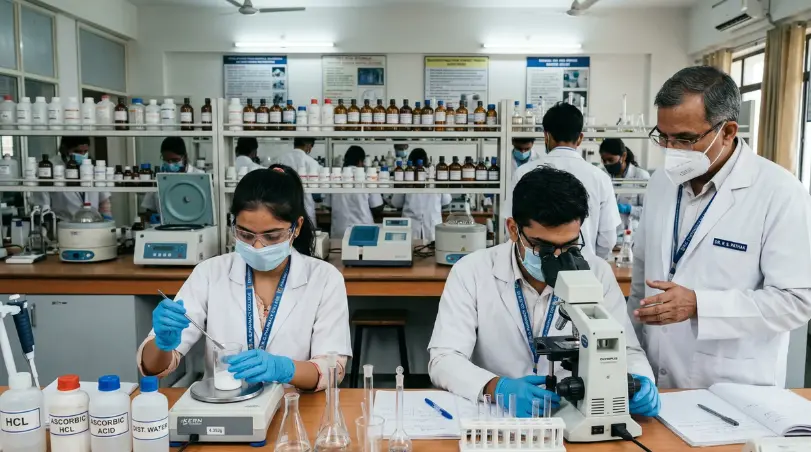
Pharmacy today connects laboratory science, clinical care, research, community health, and public safety. Classrooms provide essential theory, but true professional ability comes when students begin applying knowledge in real environments. Meaningful and structured practical training in pharmacy education shapes competence, judgment, and confidence, helping learners grow into safe and responsible professionals. Strong training experiences prepare graduates to manage medicines wisely, support patients effectively, and work as trusted members of modern healthcare teams.
Linking Classroom Knowledge With Real Practice
Theory introduces concepts such as pharmacology, pharmaceutics, pharmaceutical chemistry, and clinical pharmacy, but students fully understand them only when they see how medicines move through every step of the healthcare system. Practical exposure allows learners to connect theory with dispensing counters, hospital wards, and research laboratories. Through guided work, students gain clarity about drug formulation, dosage calculation, medication storage, and patient counseling, turning academic information into practical, real-world knowledge that supports safe pharmacy practice.
Developing Professional Skills and Technical Competence
Hands-on learning helps students develop precision and discipline. During laboratories and postings, they practice prescription handling, drug interaction checking, pharmacovigilance awareness, inventory management, and record maintenance under supervision. They learn to follow protocols, work ethically, and respond calmly when challenges arise. These experiences strengthen confidence and prepare learners for roles in hospital pharmacy, community pharmacy, and the broader pharmaceutical industry. Practical competence becomes the foundation for lifelong professional growth.
Building Confidence in Patient-Centered Care
Modern pharmacy places patients at the center of every decision. Through hospital and community exposure, students communicate with patients, explain medicines, discuss side effects, encourage adherence, and promote healthier lifestyles. Practical learning improves empathy and communication, which are key elements of patient-centered pharmacy care. By interacting with multidisciplinary teams, students understand how pharmacists support doctors, nurses, and public health workers in preventing medication errors and improving outcomes.
Understanding Safety, Quality, and Ethical Responsibility
Safe medicine use depends on strong systems and ethical awareness. Practical training exposes students to good dispensing practices, quality assurance procedures, regulatory guidelines, and legal requirements surrounding medicines. They learn the importance of preventing misuse, avoiding irrational prescriptions, and supporting responsible antibiotic use. This training strengthens patient safety while reinforcing the values needed for trustworthy pharmaceutical care and evidence-based practice.
Preparing Students for Diverse Pharmacy Careers
Graduates with strong practical exposure adapt more easily to evolving career opportunities. They feel ready to explore clinical research, regulatory affairs, drug manufacturing, quality control, pharmacovigilance, and public health pharmacy. Exposure to real systems builds confidence, encourages problem-solving, and prepares students for the demands of modern healthcare. Practical training opens pathways not only in local settings, but also in global pharmacy environments where competence and ethics are highly valued.
Institutional Role in Strengthening Practical Learning
Effective colleges create structured opportunities for laboratories, internships, hospital postings, and industry interactions. At Maratha Mandal Pharmacy College, Nipani, practical training remains a core priority throughout the curriculum. Students engage with real cases, reflect on experiences, and receive mentorship that shapes their professional identity. The goal is to develop knowledgeable, ethical, and practice-ready graduates who can support community health with confidence and responsibility.
Moving Toward Practice-Ready Pharmacists
Strong practical training in pharmacy education bridges the gap between academic learning and real healthcare needs. When students gain hands-on experience, they develop clearer judgment, improved communication, and a deeper sense of responsibility toward patients. Practical learning ultimately strengthens pharmacists, strengthens healthcare systems, and ensures safer, more effective medicine use for communities everywhere.